Preventing Mold Coming Back: The Part No Product Can Do for You
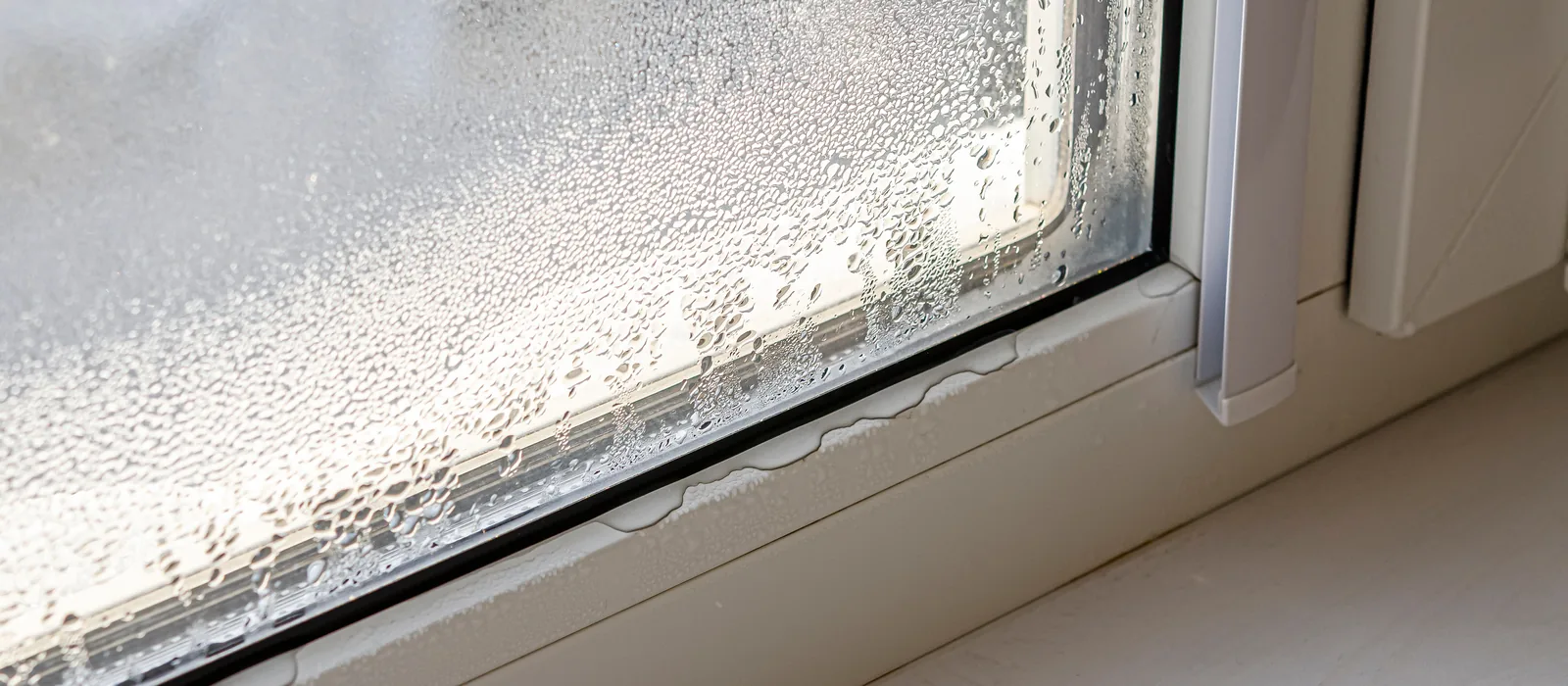
This page argues against the thing we get paid for, so read it in that light. Mold spores are already in your house. They are in every house, they arrived through the front door and the vents, and there is no product and no cleaning regime that removes them from the air. That sounds bleak and it is actually the good news, because it means the spore count was never the variable you control.
The variable you control is whether a surface stays wet long enough for those spores to do anything. Below that threshold nothing happens no matter how many spores land. Above it, mold grows on a spotless bathroom in a brand-new house. Which is why treating mold as a hygiene failure sends people scrubbing when they should be measuring, and why a gel is a way of deleting the evidence rather than solving the problem, unless the moisture is dealt with first.
Where the water comes from
An ordinary household puts gallons of water into its own air every day: showers, cooking, dishwashers, drying laundry indoors, houseplants, breathing. That vapor rides the air until it meets a surface cold enough to condense on. Condensation, not leaks, drives most household mold.
Which surfaces are coldest depends enormously on where you live, and this is where generic advice falls apart. In a cold northern winter it is single-glazed windows, north-facing exterior walls and unheated corners behind furniture. In the humid Southeast it is the opposite problem: warm wet outdoor air meeting air-conditioned surfaces, and the classic mold sites are supply registers, closet exterior walls and anything behind a poorly sealed vapor barrier. In the arid Southwest, indoor humidity is usually low enough that mold is confined almost entirely to the bathroom and around evaporative coolers.
Work out which of those describes your house before you take advice from the internet, because the fix for a cold-climate condensation problem is heat and air exchange, and the fix for a humid-climate problem is dehumidification and air conditioning. They are not the same and one can make the other worse.
The fixes, in order of impact
- Get shower steam out of the house. Run the bath fan during every shower and for 20 minutes after, or open the window wide. If the fan cannot hold a square of toilet paper against the grille, it is decorative. A fan that vents into the attic instead of outdoors is worse than none at all, and this is a genuinely common installation fault worth checking.
- Close the bathroom door, and understand why the instinct to open it is wrong. Opening the door feels like letting the steam escape. What it does is move the steam somewhere with no exhaust fan, where it meets a cold exterior bedroom wall and condenses there instead. You have not removed a pound of water, you have relocated the mold. Door shut, fan on, and let the fan take it outside.
- Stop drying laundry indoors on racks if you can avoid it. One load of wet laundry is a couple of gallons of water going straight into your air. Outside, or a properly vented dryer. Check that the dryer vent actually reaches outdoors and is not crushed or clogged, which is both a mold and a fire issue.
- Run the kitchen exhaust and cook with lids on. Cheap, invisible, effective. Again, make sure the hood vents outside rather than recirculating.
- Pull furniture off exterior walls. A dresser flat against an outside wall does two things at once: it stops air circulating across that patch of wall, and it insulates it from the room's heat, so the wall behind it sits several degrees colder than the wall either side. That is a condensation trap you built without meaning to, and it is why the mold shows up in a rectangle exactly the size of the furniture. Two inches of gap is usually enough to break it.
- Match the strategy to your climate. Cold climate: keep steady background heat so wall surfaces stay above the dew point, and ventilate in short bursts. Humid climate: run the air conditioning or a dehumidifier and do not throw the windows open on a muggy day, because you are importing moisture rather than removing it.
- Deal with the crawlspace or basement if you have one. A damp crawlspace feeds the whole floor above it. Ground vapor barriers and gutter downspouts routed away from the foundation do more for upstairs mold than most people expect.
Buy the $12 meter before the $200 machine
A hygrometer is worth buying immediately. They cost about $10 to $15 and they turn an invisible problem into a number you can act on. The EPA recommends keeping indoor relative humidity below 60 percent, and ideally between 30 and 50 percent. Measure the rooms that grow mold and the number usually explains everything without any further investigation.
A dehumidifier is the right tool when the moisture source cannot be removed: a humid climate, a basement, an apartment with no outdoor drying space and weak ventilation. It is a workaround with a running cost rather than a cure, but in a lot of the country it is the difference between a moldy summer and a dry one. Size it to the space and empty it, because a full dehumidifier is just an expensive shelf.
The honest sequence
Fix the ventilation habits first, because they are free. Measure the humidity second, because it costs about $12 and tells you whether anything else you do is working. Clean the existing staining with gel only once the moisture is under control, otherwise you are cleaning a wound you keep reopening. Keep it clear with a cheap maintenance spray. And if mold keeps returning despite dry air and good habits, or covers a large area, stop cleaning and read when mold means a bigger problem, because at that point it usually does.